
Property management has become significantly more complex over the last decade.
As portfolios grow, landlords and property managers are expected to:
To meet these demands, many operators are turning to property management automation through modern SaaS platforms.
This article explores how automation is being used in practice, the measurable outcomes it delivers, and what property managers can learn from real-world implementations.
Automation in property management isn’t about removing human involvement. It’s about removing repetitive admin, reducing risk, and improving visibility.
Modern property management software now commonly supports:
For professional landlords and managers, automation has moved from a “nice to have” to a competitive necessity.
A mid-sized residential portfolio struggled with:
Maintenance requests arrived via email, phone calls, and messages, making tracking inconsistent and error-prone.
The portfolio implemented a centralised maintenance management system as part of a wider property management platform.
Requests were logged in one place, categorised by urgency, and assigned based on availability. Progress and completion were tracked automatically.
After implementation, the portfolio saw:
By removing manual coordination, staff could focus on oversight rather than firefighting.
GreenTree Properties managed a growing portfolio with:
Admin workload was increasing in line with portfolio size.
GreenTree adopted a SaaS-based property management platform that centralised:
Automation ensured critical dates were visible and documents were always accessible.
The business reported:
Automation didn’t replace staff — it freed them up to do higher-value work.
While every portfolio is different, automation consistently delivers benefits in four key areas:
Repetitive tasks such as tracking documents, chasing maintenance updates, and monitoring deadlines are handled by the system.
Missed compliance dates and lost documents become far less likely when everything is tracked centrally.
Faster responses and clearer communication lead to higher satisfaction and retention.
Property managers gain a clear view of what’s happening across all assets, without spreadsheets or manual reporting.
Unlike legacy property management tools, modern SaaS platforms:
This makes them particularly attractive to:
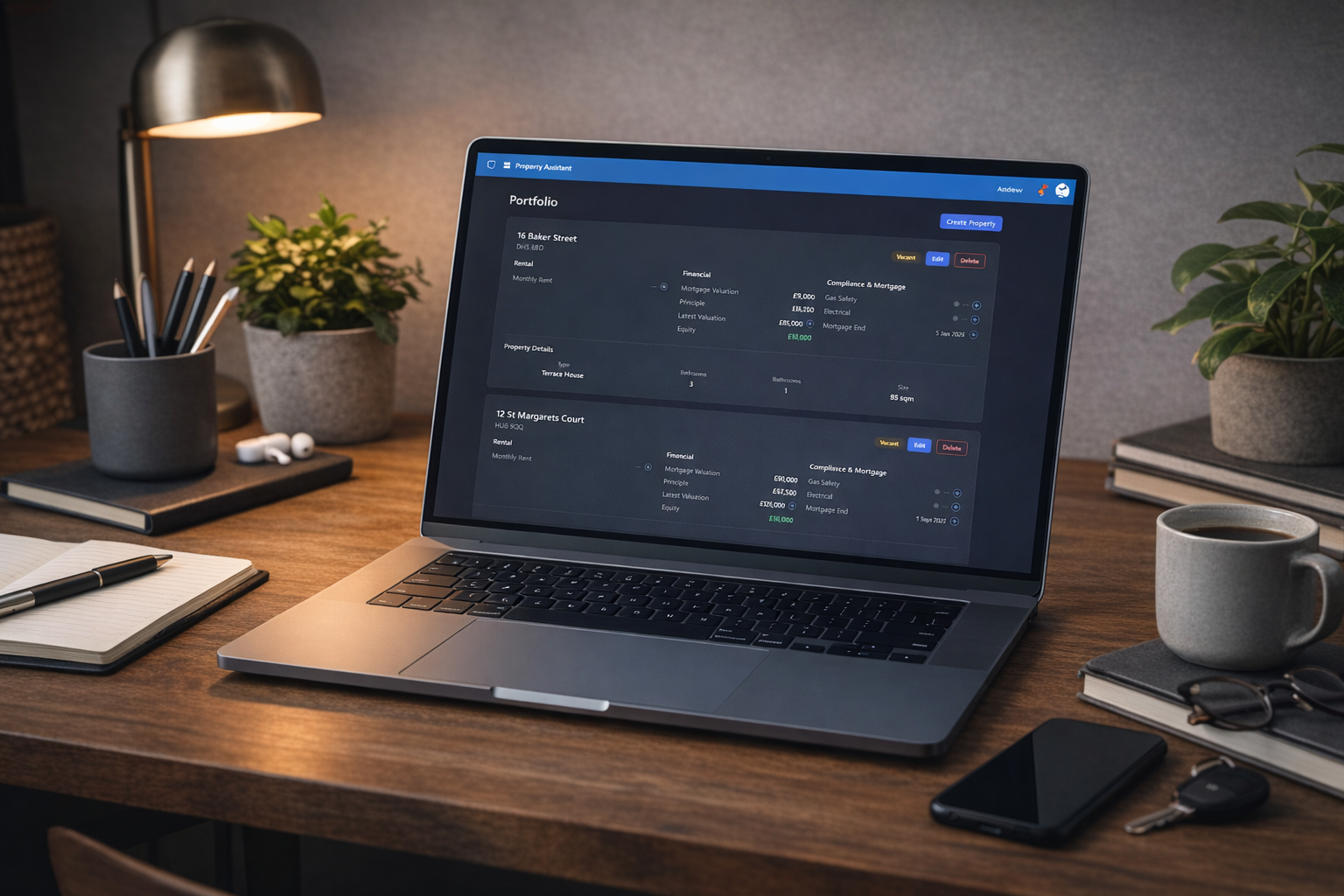
Property Assistant is a SaaS-based property management platform designed to support investors and landlords across the full property lifecycle.
Rather than focusing on individual tasks, it connects:
into a single, structured system.
This helps property professionals stay organised, reduce admin, and maintain control as their portfolios scale.
If you’re considering automation, successful implementations share common traits:
Automation works best when it’s integrated into daily workflows — not bolted on as an afterthought.
Property management automation is no longer experimental. It’s proven, practical, and increasingly essential.
As portfolios grow and regulation increases, the ability to stay organised, compliant, and responsive becomes a strategic advantage.
SaaS-based property management platforms provide the structure needed to manage complexity without increasing workload.
👉 Explore how Property Assistant helps landlords and property managers streamline operations and stay in control.
Better organisation. Less admin. More confidence.